Ambassadori Island Just Signed Two Major International Development Deals — Here's What It Means for Investors
Since May 2026, Ambassadori Island Batumi has signed two separate investment agreements — with Origami Holding and HOLM Developments — together committing more than $450 million to new construction on the island, on top of its own ongoing build-out. For investors following the project, or considering it, this is worth understanding properly: what was actually signed, why it happened now, and what it changes about the risk and opportunity profile of the investment.
This article works through the facts as published by the project, then looks honestly at what they do — and do not — tell you.
What Has Actually Been Signed?
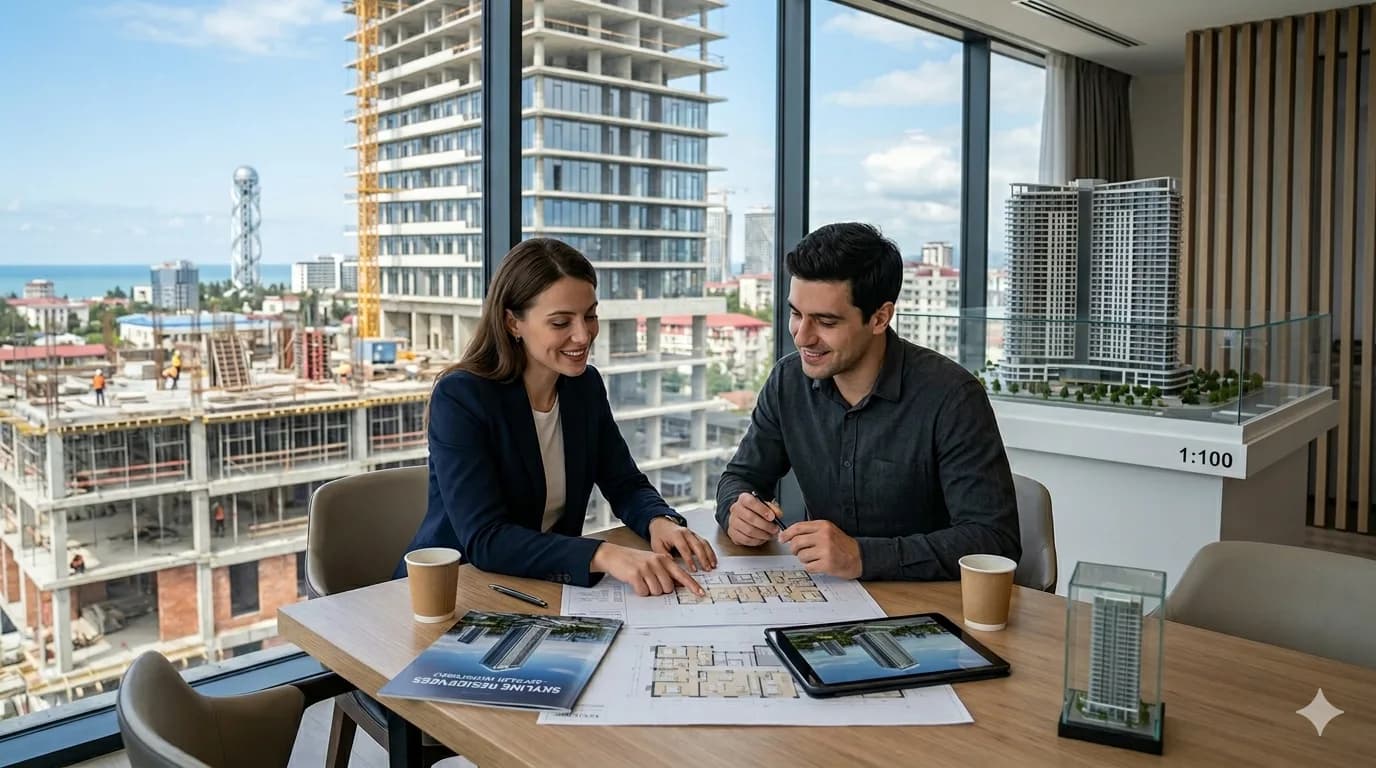
Two things happened: an agreement with Origami Holding in May 2026, and a separate agreement with HOLM Developments in August 2026 — both bringing international capital onto the island rather than Ambassadori Island building every phase alone.
May 2026: Origami Holding, a regional holding company with an 18-year operating history — with more than 3,000,000 sqm developed across Georgia and over one million hospitality guests served — agreed to invest $200 million in a multi-functional complex on the island.
August 2026: HOLM Developments, a fully equity-funded developer based in Dubai, which holds more than AED 1.1 billion (roughly $300 million) in land and construction guarantees, agreed to build a 140,000 sqm multifunctional complex on the island, backed by an investment exceeding $250 million. According to HOLM's own portfolio materials, its previous projects include one that was over 50% reserved on launch day and sold out within ten days, and another that sold out on its release date.
Both agreements were formalised through signing ceremonies attended by Ambassadori Island's leadership, and the second was followed by a public launch presentation with international media and investors present.
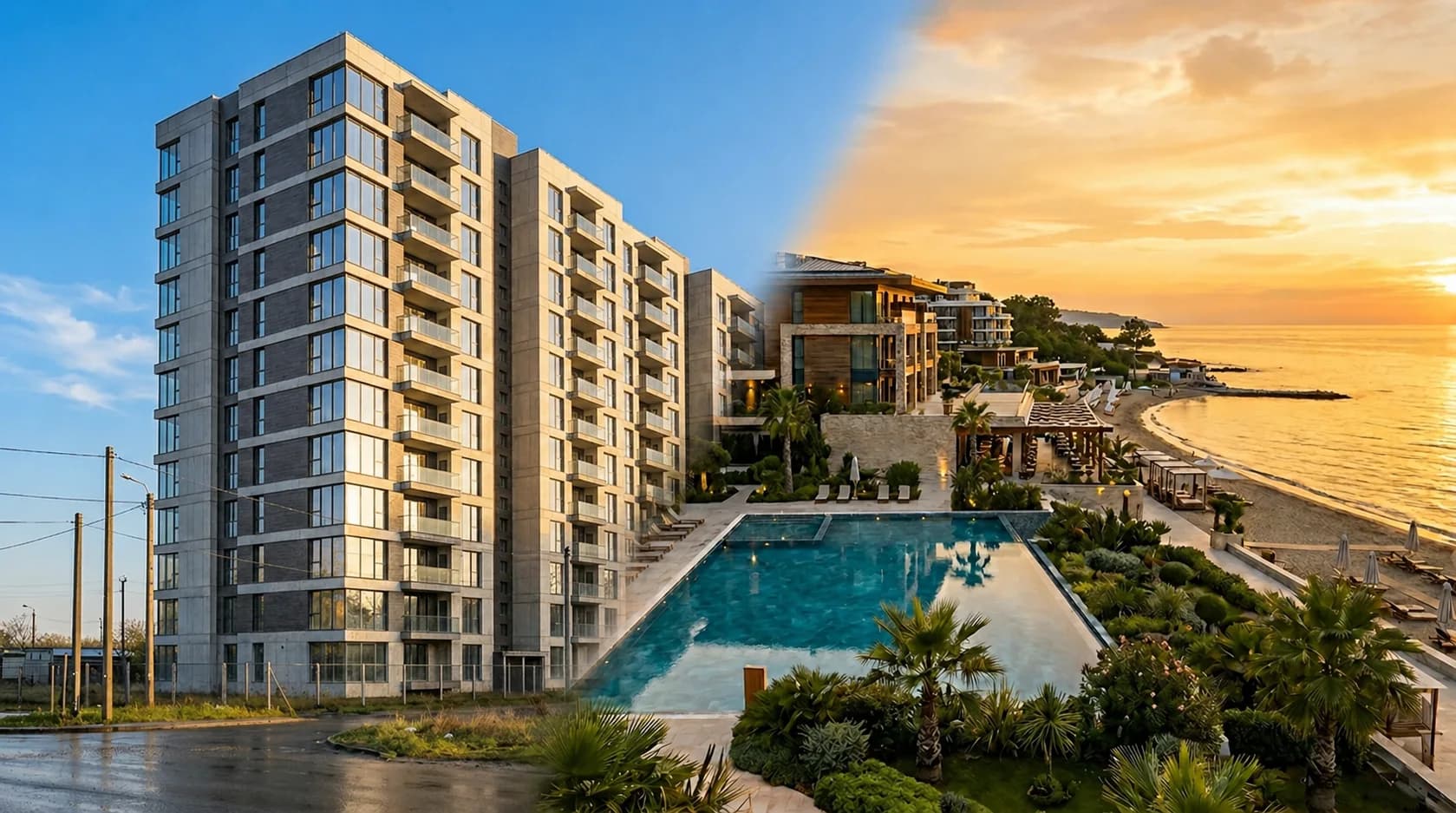
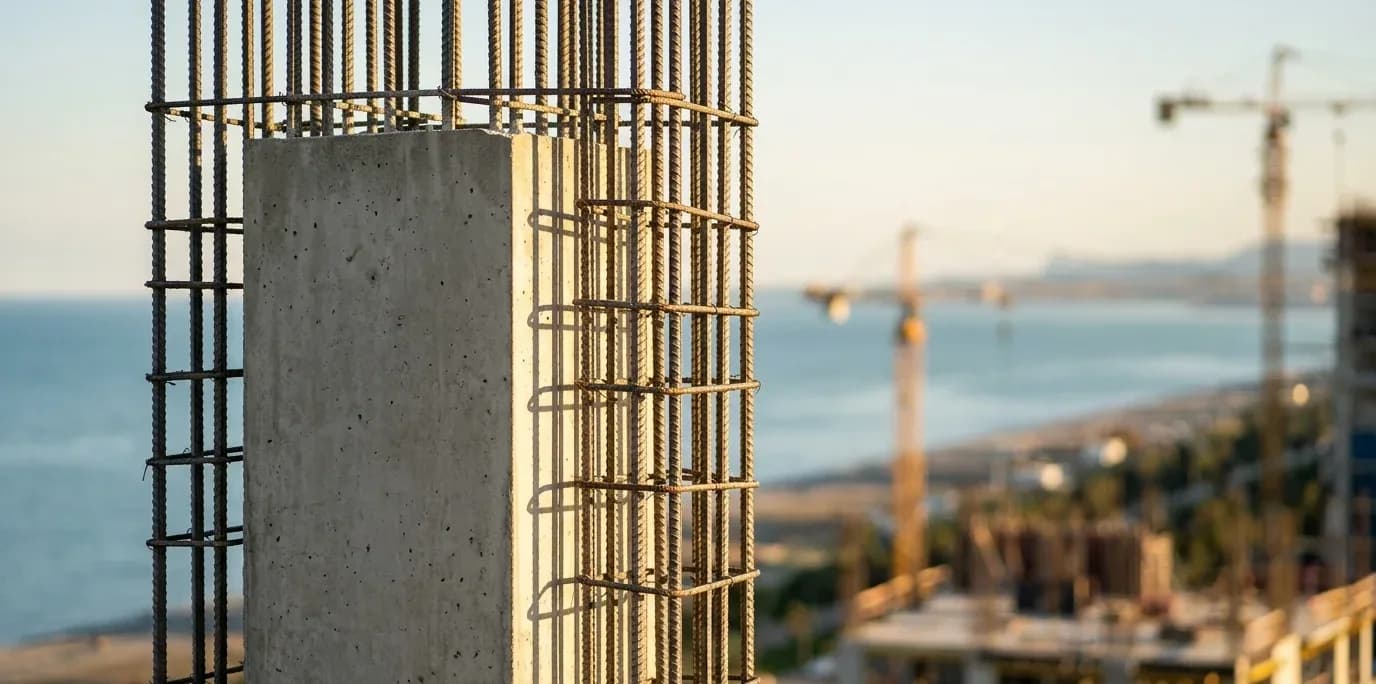
Separately from these two deals, the island's own first-phase construction — a 58-floor tower — has continued in parallel. As of mid-2026, according to Ambassadori Island's own published project updates (islandambassadori.com/news), foundation piles for the tower have reached 65 metres in depth, with 35 piles installed following a completed test-pile and laboratory validation phase, and above-ground work is underway on a three-level parking structure designed for up to 300 vehicles.
Why Is This Happening Now?
Three disclosed developments explain the timing: the island's land reclamation reached a completed, officially registered milestone, international visibility increased through major investment forums, and the project won independent industry recognition — together making the island a more evaluable proposition for outside capital than it was a year earlier.
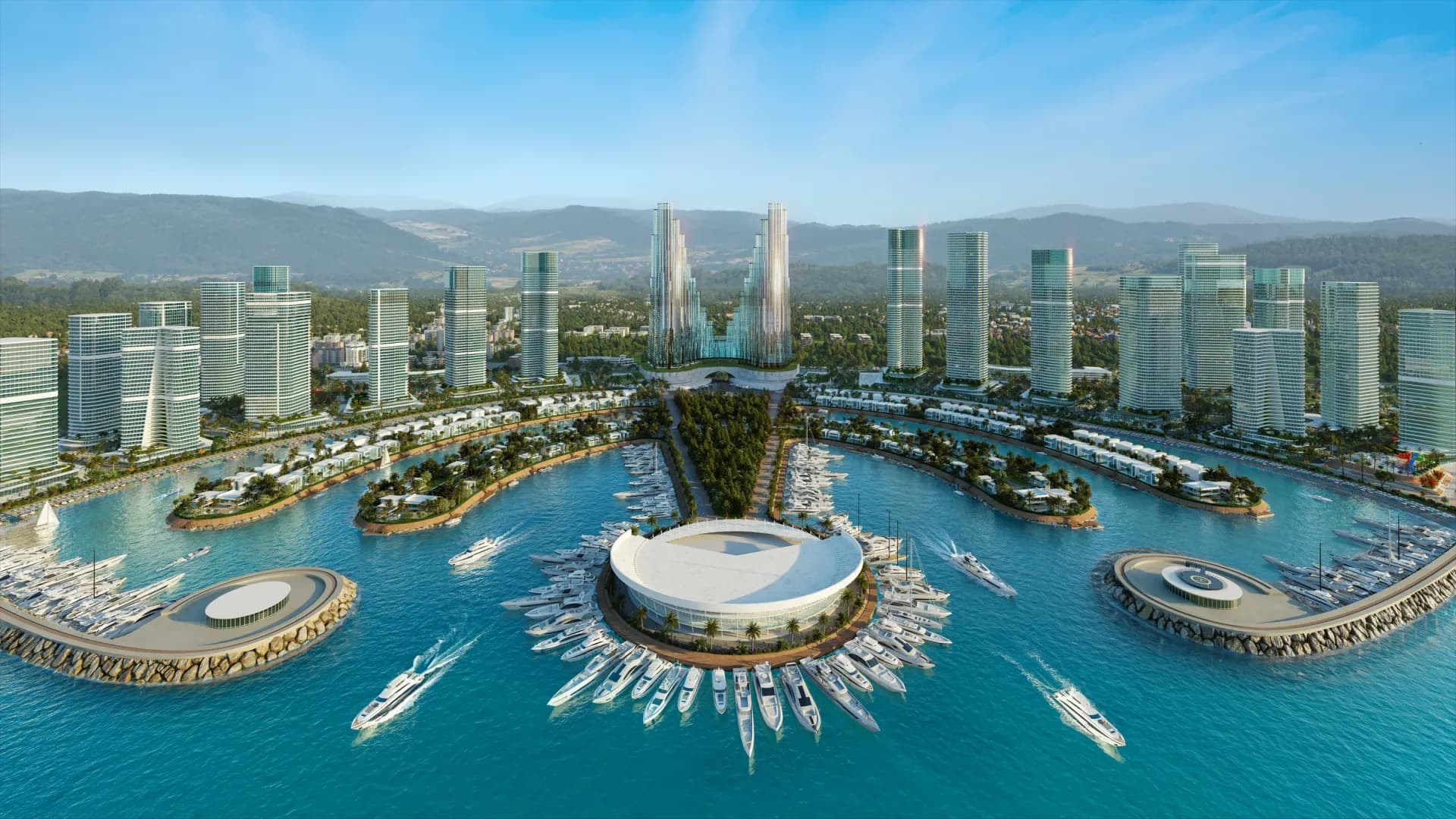
The land itself is now real, not planned. As of mid-2026, the project reports that 48 hectares of newly reclaimed land in the Black Sea have been officially commissioned, with the total reclaimed shoreline reaching 500 metres. Land reclamation is the highest-risk, least fundable phase of an artificial-island megaproject. Once it is complete and officially registered, the project becomes a fundamentally different proposition for outside capital to evaluate.
International visibility has increased. Over the first half of 2026, the project was presented at MIPIM in Cannes and MIIF in Monaco — two of the more established venues where institutional real estate capital looks for opportunities — and separately took part in the Polish–Georgian Economic & Investment Forum in Tbilisi. Visibility at this level tends to precede exactly the kind of agreements now being signed.
Independent recognition has followed. In June 2026, the project won two categories at the Luxury Lifestyle Awards 2026 — Best Luxury Coastal Masterplan Development, and Best Luxury Urban Development in Georgia. An award is not a substitute for due diligence, but third-party recognition of this kind is one data point international partners weigh when deciding where to commit capital.
What Does This Mean for Investors?
1. Development risk is being spread, not concentrated. An 84-hectare, 50+ building megaproject built entirely by one developer carries a very different risk profile than the same masterplan built in partnership with multiple, independently capitalised developers, each responsible for their own zone. When a partner brings its own equity and its own guarantees, it takes on execution risk for that portion of the site — risk that would otherwise sit entirely with Ambassadori Island, and indirectly with buyers.
2. The amenity base grows faster than a single developer could build it alone. Rental demand in a mixed-use destination is driven by what surrounds a property, not only by the unit itself. Two additional multifunctional complexes — together representing well over 200,000 sqm of new construction — mean more hospitality, retail, and leisure infrastructure arriving on a similar timeline to the residential towers, rather than years afterward. For owners planning to rely on short-term rental income, a denser, earlier-arriving amenity base is a meaningful factor in achievable occupancy and rates.
3. External capital is a form of independent validation — with limits. When developers with their own balance sheets choose to deploy hundreds of millions of dollars into a project, they have done their own diligence first. That is a genuinely useful signal, and a stronger one than marketing material alone. But it is not a guarantee. Signed agreements can be delayed, restructured, or in rare cases not proceed at all — this has happened on megaprojects elsewhere in the world. The signal is real; it does not substitute for your own review of contracts, payment schedules, and construction milestones before committing capital.
4. Pace matters more than any single announcement. The more consequential fact for investors evaluating the project is not any one agreement — it is that construction on the first tower has continued on a documented, incremental basis (pile depth, formwork area, reinforcement metres) throughout the same period the partnership agreements were being signed. A megaproject that only announces partnerships without visible construction progress would be a materially weaker signal. This one is showing both.
What Should You Watch Before Committing?
None of this replaces standard due diligence, and a few points are worth flagging honestly:
- "Signed" is not "built." Both partnership agreements are recent — the phasing and construction start dates for the partner-built complexes have not yet been independently verified through delivered work. Treat them as strong directional signals, not completed milestones.
- Progress figures are self-reported. Construction statistics (pile counts, formwork area, land reclamation totals) come from the project's own public updates. They are specific and verifiable in principle — a site visit or an independent engineer's report can confirm them — but they have not been audited by a third party in the sources available.
- A megaproject has more moving parts than a single building. More partners and more parallel workstreams create more coordination complexity, even when each individual partner is well capitalised. This is a structural feature of large masterplans everywhere, not specific to this one.
What Does This Signal for Batumi's Wider Market?
Individually, either of these two agreements would be a notable development story. Together — combined with the awards recognition, the international forum presence, and continuing tower construction — they point to something slightly larger: international real estate capital is treating Batumi's flagship megaproject as investable at scale, not only marketable to individual buyers.
That distinction matters. Retail buyer interest can be generated with marketing spend. Institutional developer capital, backed by construction guarantees, requires a level of confidence in land title, permitting, and delivery timeline that individual buyers are rarely in a position to assess directly — which is exactly why it is a useful signal to watch.
Ambassadori Island is one of the projects available through Azavar Group. Our team can walk you through current pricing, payment terms, and the legal documentation behind the project — including verification of the milestones referenced in this article.