Why Construction Quality Matters in Batumi — and Why Cheap Property Isn't Cheaper
There is a common mistake first-time investors make in Batumi.
They open a property listing site, sort by price, and start at the bottom. The cheapest apartment looks like the safest entry point — small risk, small money, easy to recover if something goes wrong.
In reality, this is the single fastest way to lose capital in Batumi real estate.
This guide explains why construction quality is the most important factor in your investment decision, what specifically to look for in a coastal city like Batumi, and why a more expensive apartment is almost always the cheaper one over a five-year horizon.
The Hidden Math: Price Per Square Metre Tells You Almost Nothing
A $40,000 apartment and a $90,000 apartment of the same size look like they are the same product at different price points. They are not.
The cheaper unit is almost always cheaper for a reason. Usually several reasons:
- Lower-grade concrete and reinforcement
- Thinner walls and inferior insulation
- Cheaper windows that fail in coastal weather
- Basic finishing that needs replacing within five years
- A developer with no track record — and no incentive to deliver quality
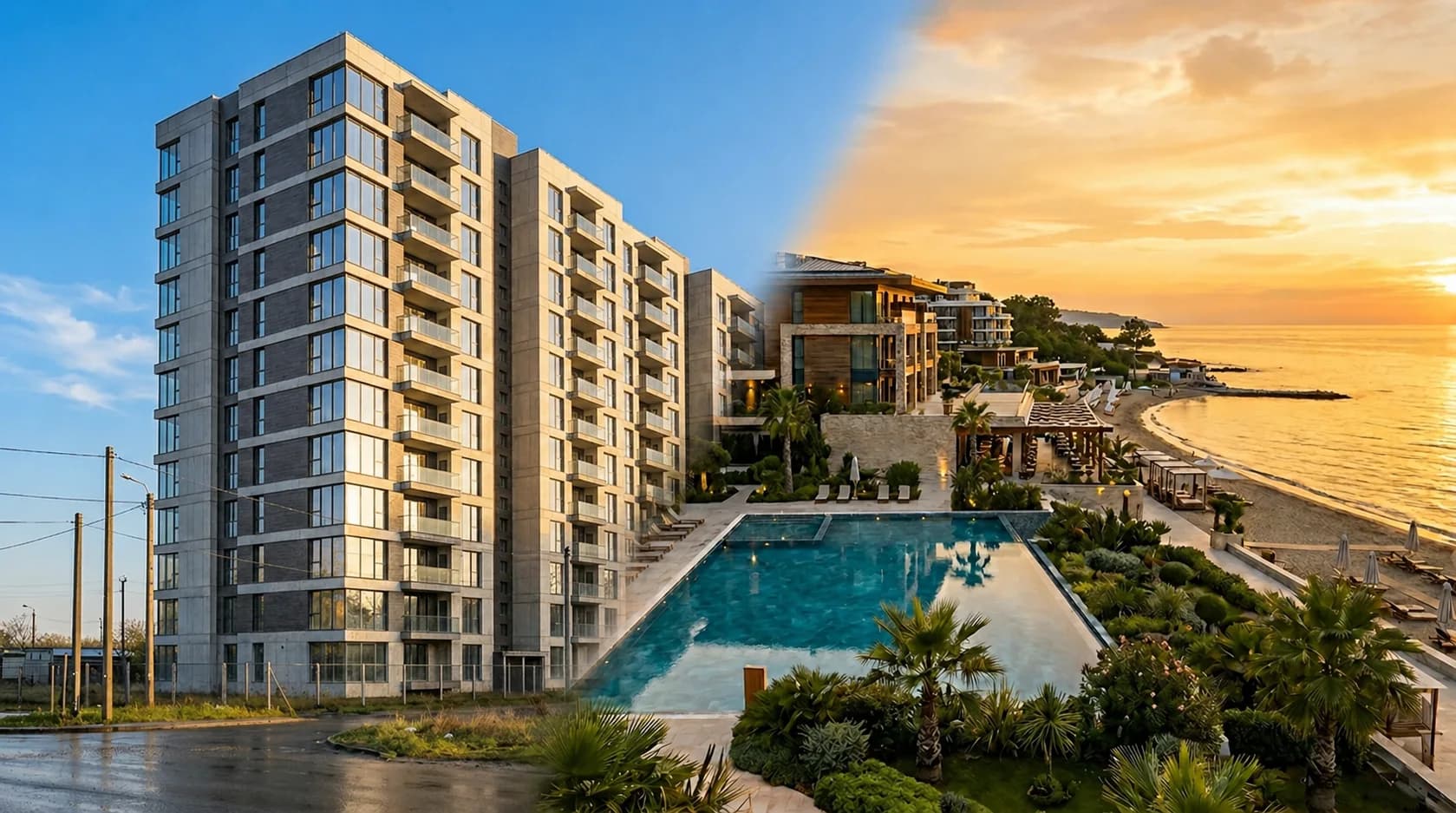
The price difference is not arbitrary. It reflects real differences in materials, engineering, and execution. When you save $50,000 at purchase, you are not getting a discount. You are agreeing to receive a building worth $50,000 less.
The problem is that the difference does not show up on day one. It shows up at year three, when the facade starts to discolour. Year five, when the windows leak. Year seven, when the building's reputation slips and your rental yield drops with it.
"The cheapest apartment in Batumi is rarely the cheapest investment in Batumi."
Three Things About Batumi That Punish Cheap Construction
Construction quality matters everywhere. But Batumi has three specific characteristics that make it punish low-quality builds harder than most cities.
1. The salt air is relentless Batumi sits directly on the Black Sea. Salt-laden air is one of the most aggressive environments for buildings on earth. It corrodes steel reinforcement, eats paint and metal fittings, degrades window seals, and stains facades.
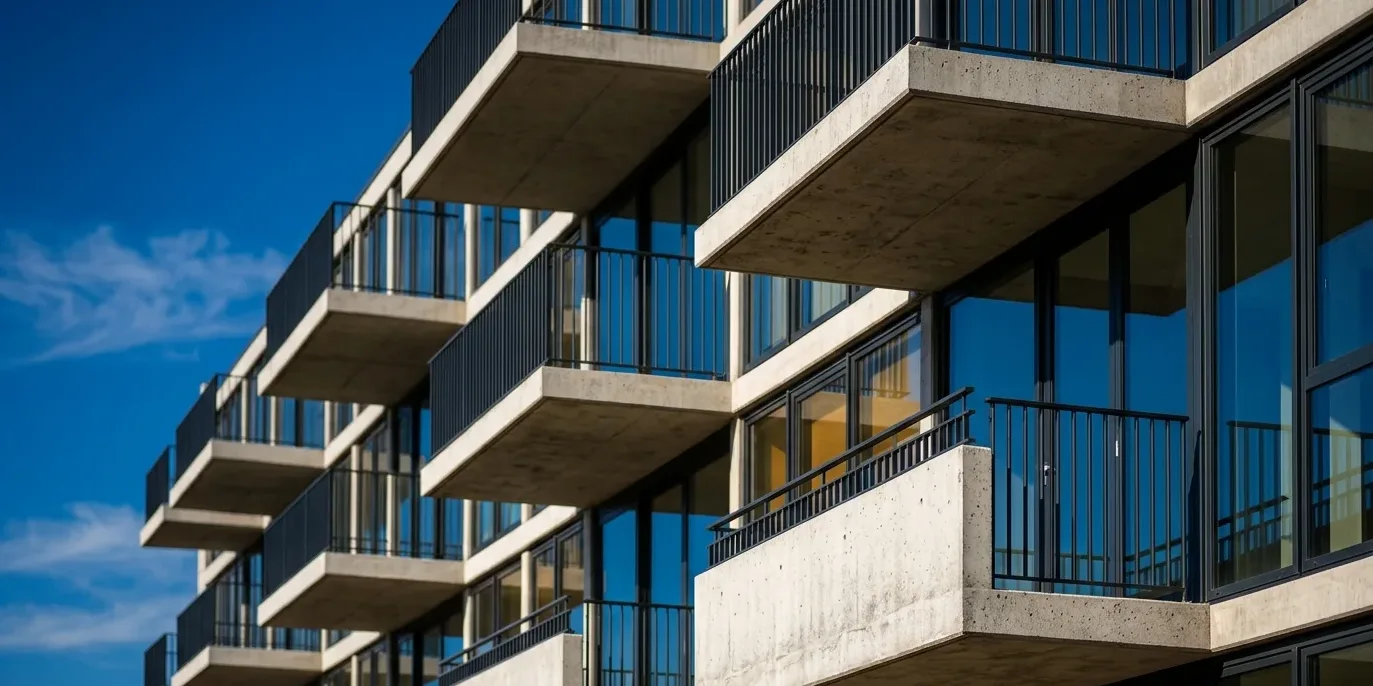
Buildings constructed with European-grade materials and proper anti-corrosion treatment will look almost the same in ten years as they did at handover. Buildings constructed with cheap materials and skipped protection layers can look visibly tired within three to five years — and the damage often runs deeper than what you can see.
2. The seismic risk is real Batumi sits in a seismically active region. Georgian building codes require structures to withstand significant seismic activity, but enforcement varies widely between developers.
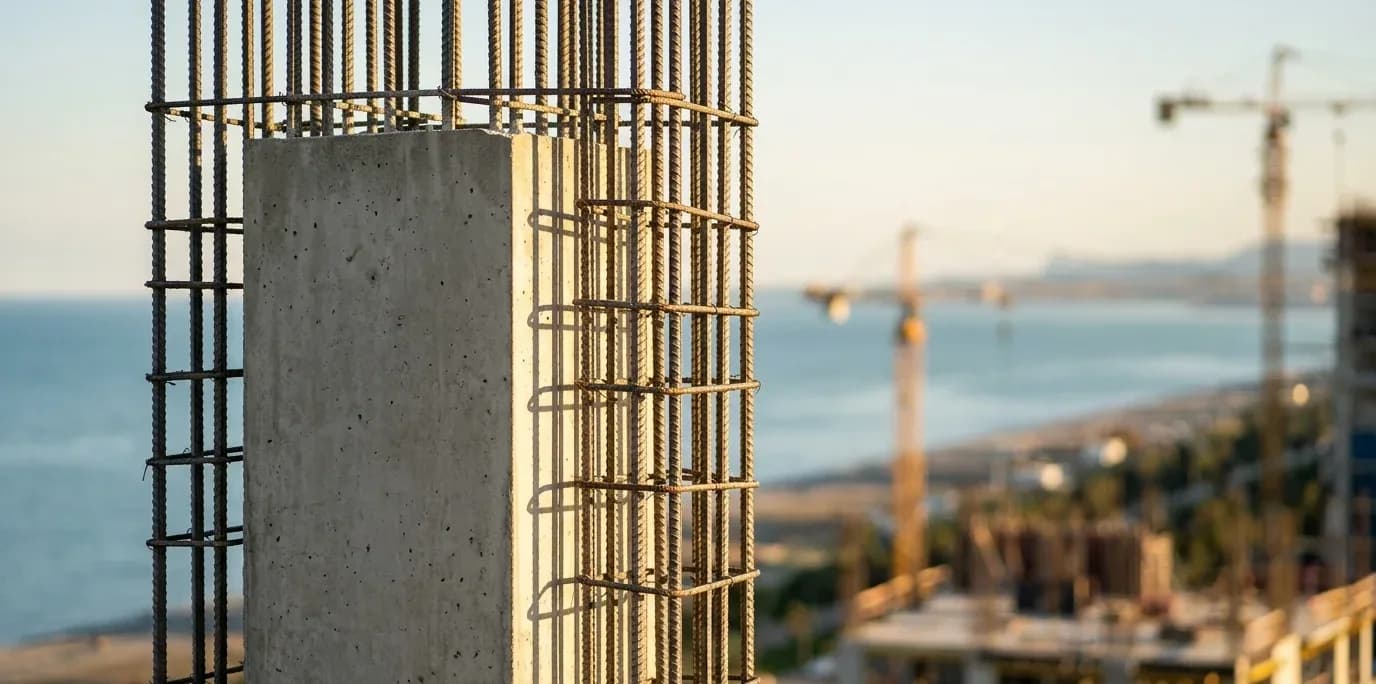
Quality projects use fibre-reinforced concrete, monolithic-frame construction, and engineering certified to magnitude 8 or higher. Cheaper projects cut corners on rebar density, use lower-grade concrete mixes, and sometimes skip critical structural details that only become visible during an actual earthquake. By then, it is too late.
3. The climate is humid and intense year-round Batumi has a subtropical climate with heavy rainfall, high humidity, and strong sun in summer. This combination is brutal on poorly waterproofed buildings, cheap roofing systems, and substandard ventilation. Mould, damp, and structural water damage are common in lower-tier developments.
Quality construction handles this climate without complaint. Cheap construction starts visibly suffering within the first few years.
The Developer Quality Spread in Batumi Is Enormous
This point matters and it is rarely said clearly: the gap between the best and worst developers in Batumi is far wider than in most established markets.
In a city like London, Vienna, or Dubai, a basic regulatory floor catches the worst builders. Standards are enforced. Permits are checked. Bad developers are filtered out before they can do real damage.
In Batumi, the regulatory floor is lower. The market is younger. There has been a building boom over the past decade that attracted developers partnering with world-class hospitality brands and architects — Rotana, Wyndham, Radisson Blu, Pullman, Crowne Plaza, Kengo Kuma & Associates — alongside a long tail of opportunistic builders who entered the market to ride the wave.
The result is that two buildings on the same street can be completely different products. One uses European-certified materials, smart structural engineering, and carries a 10-year construction guarantee. The other uses whatever was cheapest that quarter.
For an investor, this means you cannot rely on the assumption that "everything in Batumi is roughly comparable." It is not. You have to actively distinguish quality from price.
How Quality Drives ROI — The Numbers That Matter
Quality construction is not just about avoiding problems. It directly drives your investment returns through three specific channels.
Channel 1 — Higher rental rates Tourists and long-term tenants pay a meaningful premium for buildings that look good, feel solid, and operate properly. A well-built apartment in a managed branded residence can charge two to three times the nightly rate of a poorly built unit in the same location. Over a year, that is the difference between a 5% yield and a 14% yield.
Channel 2 — Higher occupancy Quality buildings get repeat bookings, better reviews, and stronger placement on rental platforms. Cheap buildings struggle to maintain occupancy because reviews trend negative as the building ages. Empty months destroy ROI more than almost any other factor.
Channel 3 — Resale value When you eventually sell, your buyer is doing the same calculation you did. Quality buildings hold their value and often appreciate. Cheap buildings depreciate as the visible wear accumulates. The investor who paid $40,000 and the investor who paid $90,000 may both want to exit in year five — but only one of them is likely to make money on the sale.
A useful rule: the investor who optimises for the lowest entry price often pays for it three times — through lower rent, lower occupancy, and lower exit value.
What to Actually Check Before You Buy
If you are evaluating a project in Batumi, these are the questions that separate quality from cosmetic appeal.
On the developer:
- How many projects have they completed and delivered?
- Can you visit a finished building from the same developer and inspect it?
- Are they backed by an international brand with reputational stake?
- How long have they been operating in Georgia?
On the construction:
- What grade of concrete and reinforcement is being used?
- What seismic resistance rating does the structure carry?
- Are the materials European-certified, or unspecified?
- Is there a written construction guarantee — and how long is it?
On the finishing:
- What brand of windows, plumbing, and electrical fittings?
- Is the unit sold turnkey or white frame, and what exactly is included?
- What is the management arrangement after handover?
A quality developer will answer every one of these questions clearly, with documentation. A low-quality developer will deflect, generalise, or change the subject. The difference in how questions are answered is often the most reliable signal you will get.
Quality vs. Cheap: A Five-Year Comparison
| Cheap Build | Quality Build | |
|---|---|---|
| Entry price | Lowest in market | 30–60% higher |
| Visible condition Y5 | Tired, dated | Near-new |
| Rental yield (annual) | 5–8% | 12–16% |
| Occupancy | Inconsistent | Strong |
| Resale value Y5 | Flat or down | Up 25–40% |
| Maintenance costs | Rising sharply | Predictable, low |
| Total 5-year return | Often negative in real terms | Strong double-digit |
The cheap build wins on day one. The quality build wins on every other day for the next decade.
The Premium Is Not a Luxury — It Is the Investment
This is the core idea worth holding on to.
When you pay more for a quality build in Batumi, you are not paying for marble countertops or branded towels. You are paying for the engineering, materials, and developer track record that will determine whether your investment performs over five and ten years.
Cutting that cost is not a saving. It is removing the actual asset you came to buy.
The investors who do well in Batumi tend to share one habit: they treat the property itself as the variable to optimise, not the price tag. They start by identifying which developers and which buildings are genuinely well-constructed, then they choose the most affordable unit within that filtered set.
This is the opposite of how most first-time investors approach the market. It is also why most first-time investors underperform.
How We Filter on Your Behalf
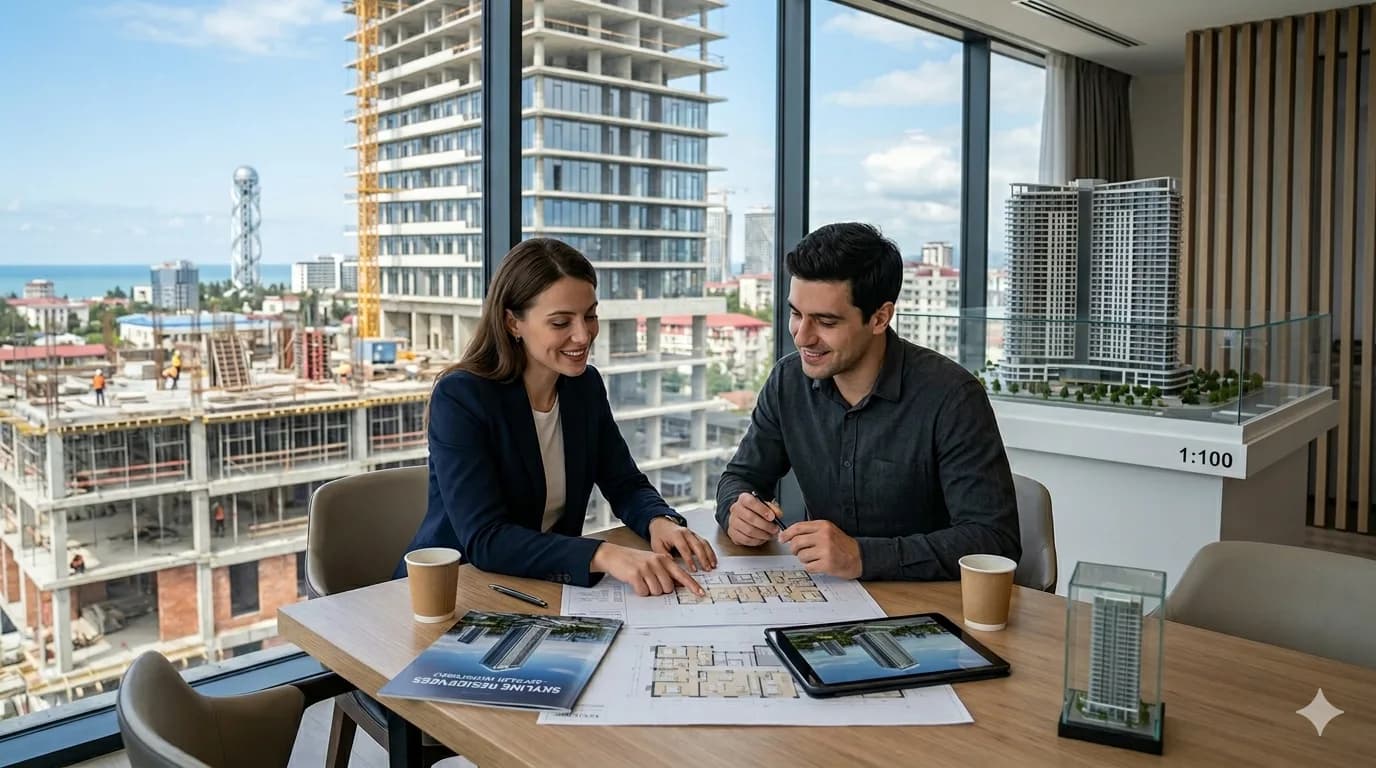
At Azavar Group, our portfolio is deliberately small. We do not list every off-plan project in Batumi — far from it. Every project that appears on our site has been reviewed by our legal team and assessed against our construction quality criteria before we present it.
We turn down projects that do not meet the standard. This is the entire reason we exist as a company.
If you are considering an investment in Batumi, the most useful thing we can do is walk you through what good actually looks like — and show you how to spot the difference yourself.
Explore our current verified projects in Batumi — every one selected for construction quality, developer reputation, and long-term investment performance.